


Released on July 18, Fogpiercer is a roguelike deck-builder developed by Mad Cookies Studio.
In this sci-fi roguelike deck-building game, players must traverse a deadly fog, relying on clever positioning, powerful chain reactions, and the battlefield environment itself to determine their fate.

I. Game Overview
In this game, an unknown cataclysm has completely overturned the order of human civilization, leaving the entire continent permanently sealed off by a lethal, dense fog. This fog obscures the sun and visibility, cuts off regional communications, and corrodes all exposed living organisms and mechanical facilities.
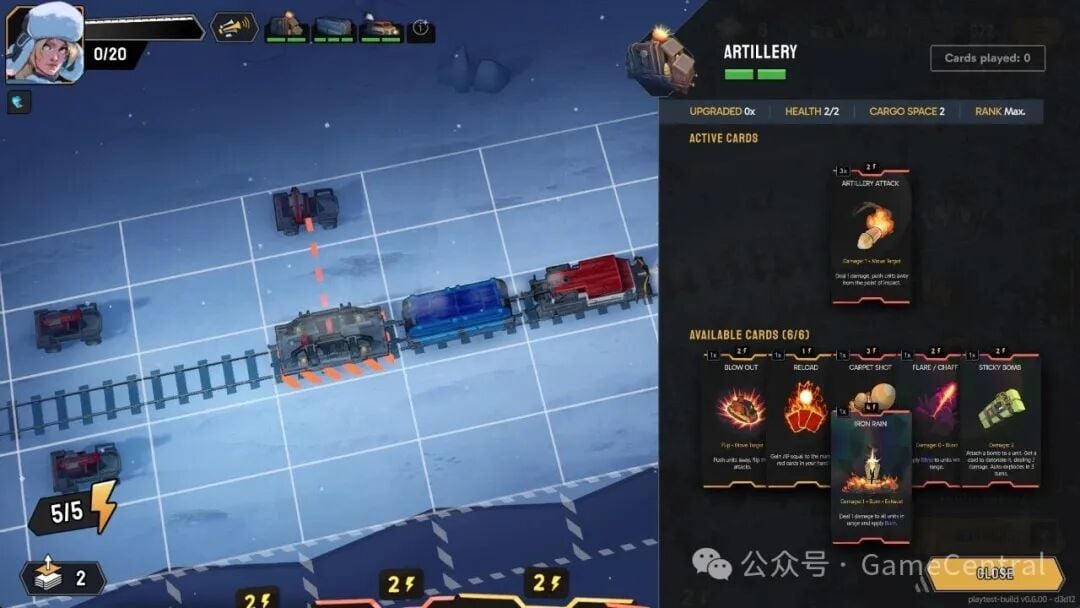
Once-prosperous cities and buildings now lie in ruins, and the surviving humans are forced to huddle in safe havens. Across this foggy wasteland, the railway has become the only lifeline for survival. The train is the only mobile home in this apocalypse. Fixed tracks, unaffected by the foggy terrain, can penetrate the wasteland, cross ruins, and connect isolated safe havens, serving as the only stable path for travel in the end times.
In the game, players take on the role of a train conductor, piloting a custom-built armored train through layers of fog. You must defeat raiding parties blocking your path, collect scarce survival supplies, and reach distant safe havens, fighting through cycle after cycle of expeditions to secure a glimmer of hope for yourself and other survivors.
II. Deck-Building Mechanics
In Fogpiercer, your train is your deck; every component of the train determines your combat capabilities and tactical ceiling.
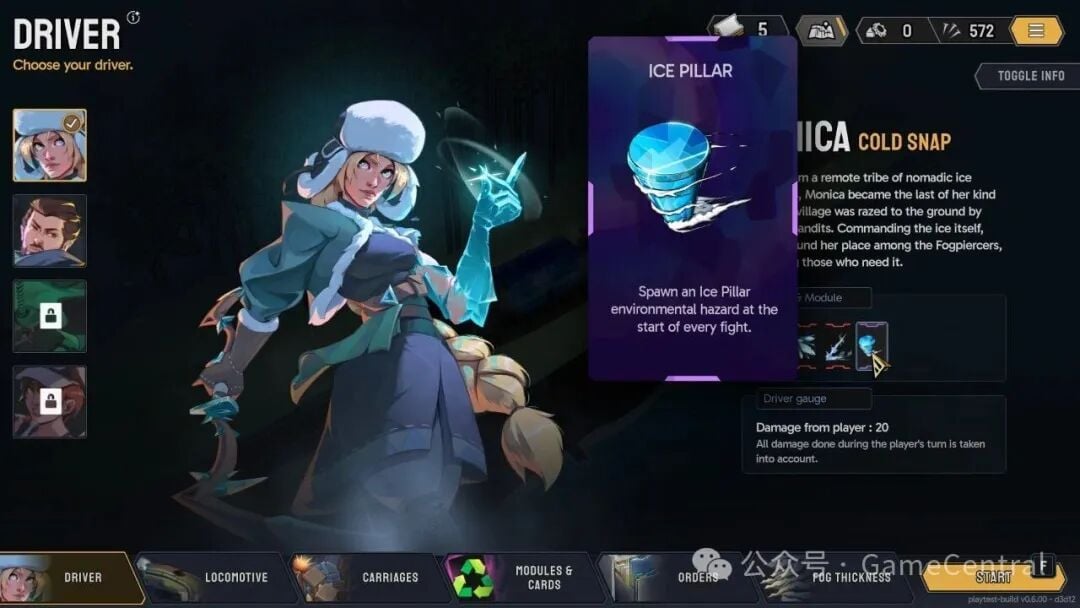
The player's combat train consists of four parts: the Conductor, the Locomotive, the Utility Cars, and the Core Modules. Together, these form a complete card pool and combat system. Every choice and replacement of these modules influences your build archetype.
The Conductor is the tactical core of the train. Each conductor possesses a unique ultimate skill, an initial card pool, an energy charging mechanism, and a tactical role, defining the core strategy for the entire run.
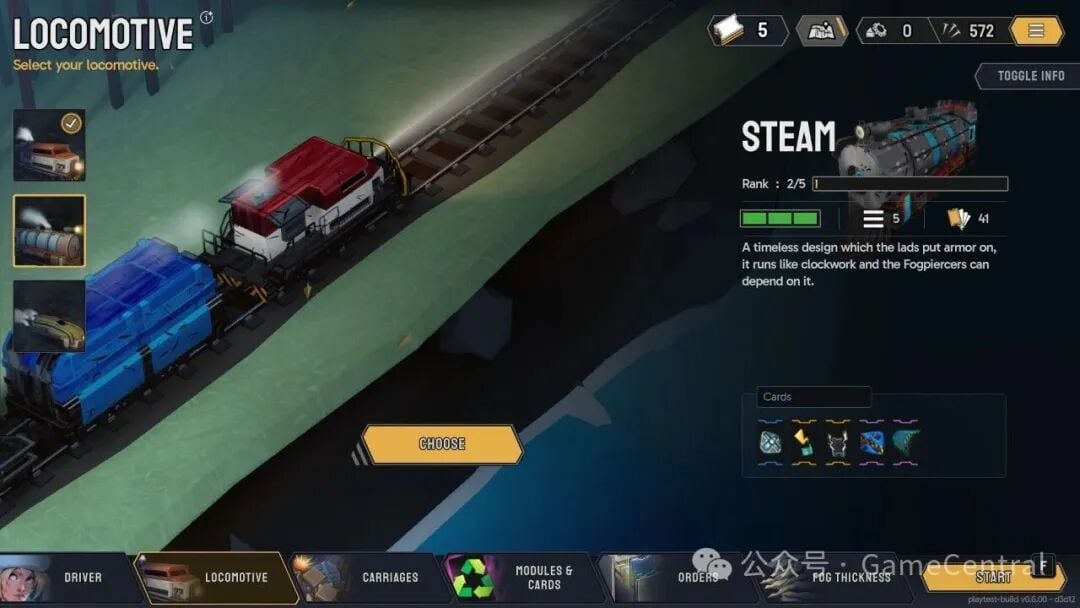
The Locomotive is the core carrier of the train, acting as the vehicle's HP and energy source.
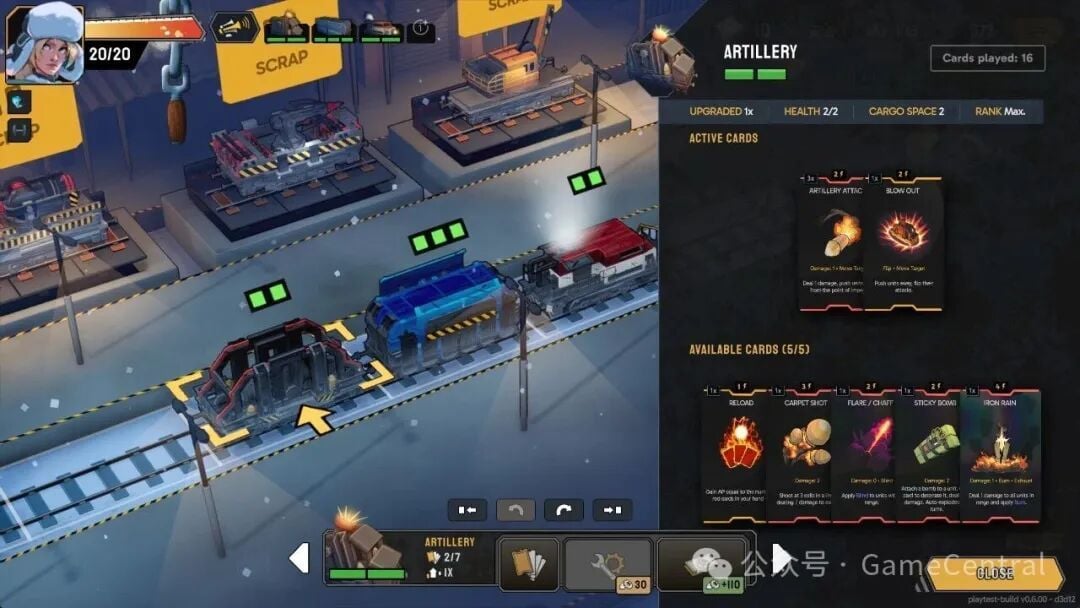
Utility Cars make up the bulk of your deck. The game features over a dozen cars with completely different functions, covering damage, defense, control, mobility, sustainability, and disruption. Each car corresponds to a specific set of cards.
At the start of each run, players only have basic cars. As the expedition progresses, you can unlock new cars through shops, events, and mission rewards, allowing for free assembly and customization.

Additionally, the game introduces a "Malfunction" risk mechanism. All utility cars are consumables; if they take excessive damage, they will break or become scrapped, directly impacting the quality of your deck.
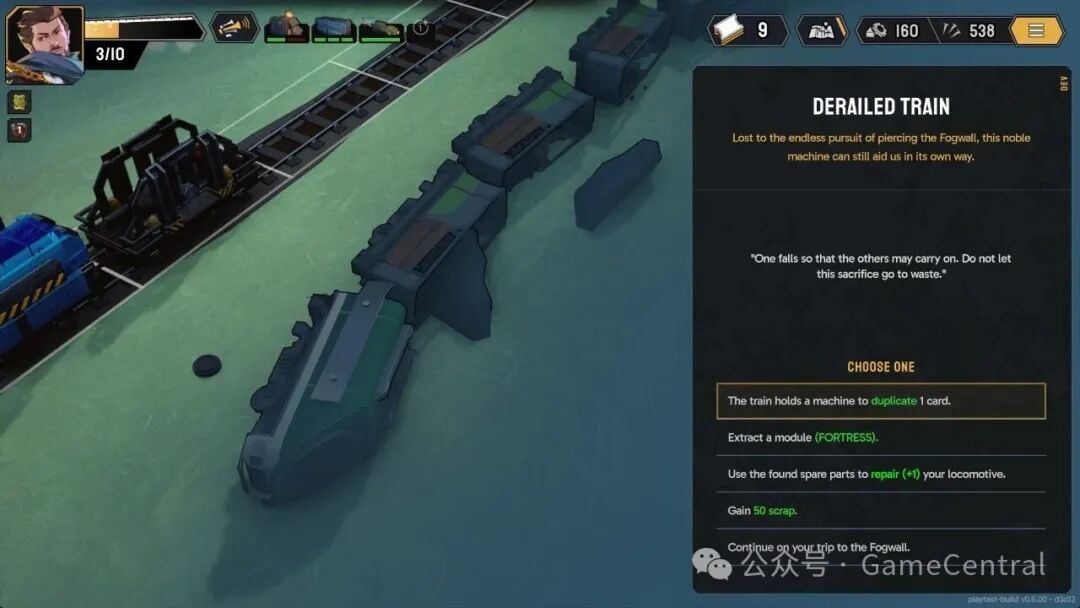
During combat, enemy attacks not only deplete the train's HP but also target specific utility cars. When a car's damage threshold is reached, it doesn't disappear immediately but enters a "Malfunction" state. At this point, negative "Malfunction Cards" are automatically generated in your deck. These cards cannot be played, occupy deck space, continuously drain the locomotive's HP each turn, and reduce overall combat effectiveness, becoming a persistent hazard on your journey.
To deal with malfunctioning cars, players must spend scarce resources to repair them on the spot or discard the damaged car entirely to permanently remove the negative cards.
III. Combat System
The fun of Fogpiercer's combat gameplay is centered on spatial positioning, enemy prediction, movement synergies, and chain-reaction damage.
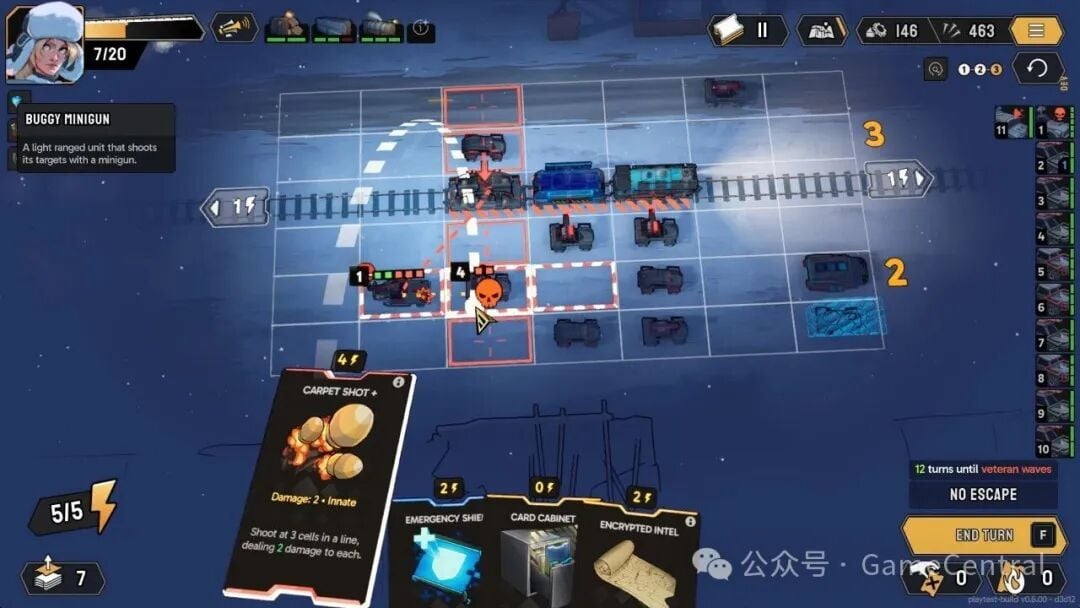
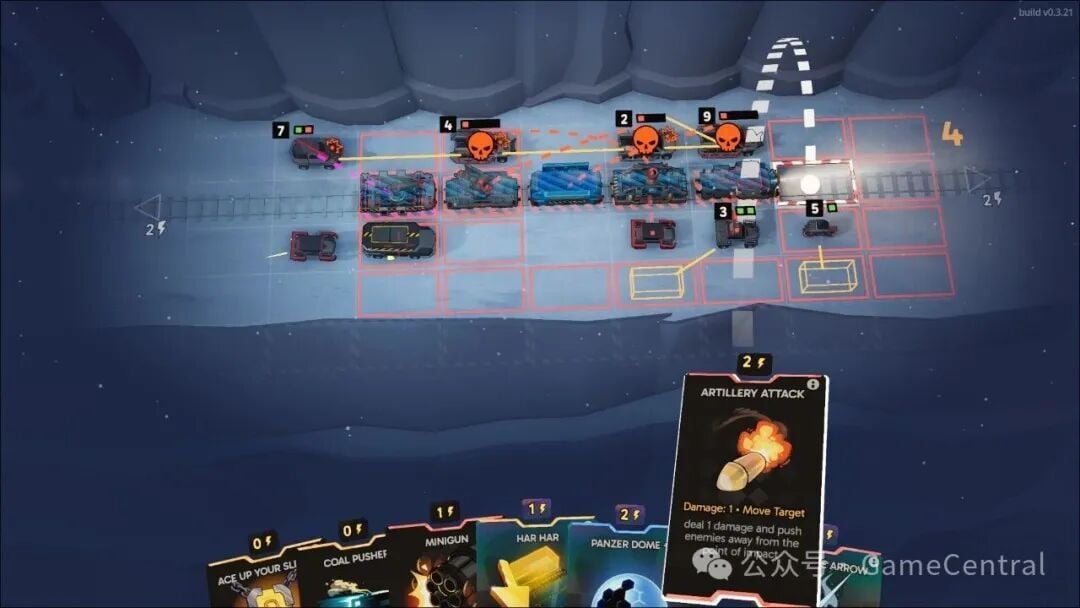
All combat scenarios take place on a fixed grid. Your armored train is stationed in the center of the battlefield and cannot move freely over large distances, only shifting slightly forward or backward to avoid damage. Enemy units approach from the front, back, and sides, gradually compressing the player's survival space.
At the start of combat, all enemy actions, attack ranges, damage values, and movement paths are clearly displayed on the interface, allowing players to predict the impact and location of every enemy attack. Victory depends entirely on the player's predictive ability and tactical layout.
IV. Conclusion
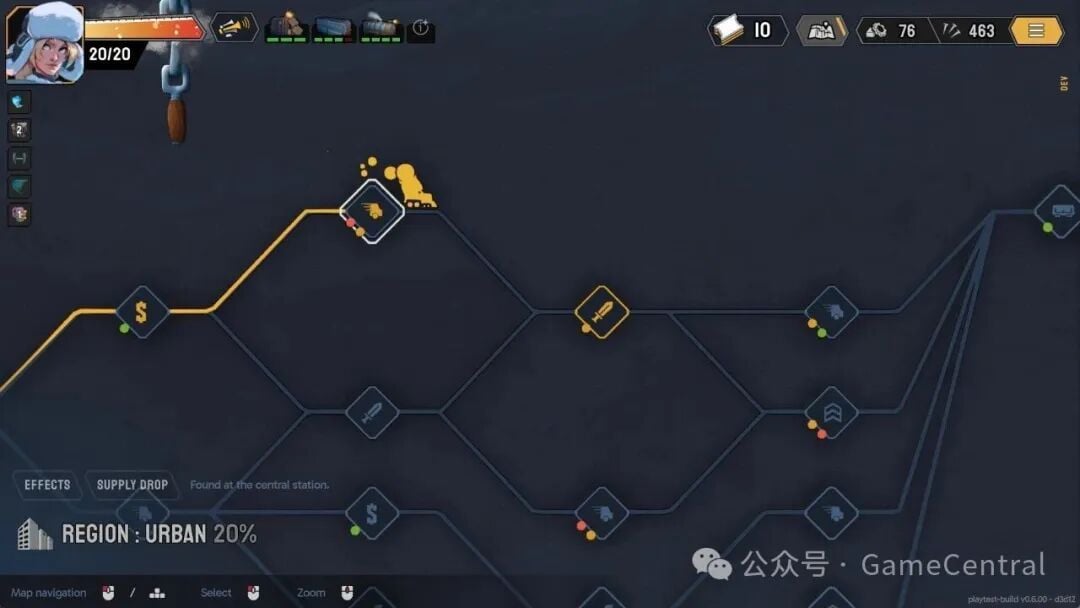
Beyond the content mentioned above, the game also features action points, random events, archetype building, tactical depth, procedurally generated maps, and roguelike mechanics for players to explore on their own.

Comments