

Master the exact 10-minute garrison recovery countdown in Infinite Borders. Learn how battle draws, march timing, and troop resets operate before attacking.
Locking into a battle draw against a high-level resource tile can stall an early campaign in NetEase's Three Kingdoms strategy MMO. Misunderstanding tile defender mechanics burns drafted soldiers and concedes territory to rival lords.
Tile garrisons follow exact rules during battle draws. Coordinating defender recovery timers, health retention, and march transit turns high-tier expansion into a calculated process.
The Universal 10-Minute Garrison Recovery Countdown
Failing to wipe out a land or battlefield garrison immediately triggers a 10-minute recovery window. System defenders remain frozen at their reduced troop counts for these ten minutes, with zero passive healing applied to wounded units.
The countdown starts the moment combat calculates on the server. If your primary strike force draws, they stay locked in combat on the tile. If the 10-minute restore timer hits zero while that draw status is active, the game forces an automatic retreat. Your soldiers march home instantly instead of fighting the refreshed defenders.
Alumni Tournament servers are the only exception to this rule; standard 10-minute non-recovery timers and forced auto-retreats do not apply there. On all seasonal rule sets, the 10-minute window dictates every multi-wave assault.

Infinite Borders - Infinite Borders - 288 Jades
 Infinite Borders - Infinite Borders - 288 JadesUSD 3.26Buy Now
Infinite Borders - Infinite Borders - 300 Jades Tribute Pack
Infinite Borders - Infinite Borders - 300 Jades Tribute PackUSD 4.08Buy NowInfinite Borders - Infinite Borders - 720 Jades
Infinite Borders - Infinite Borders - 720 JadesUSD 8.17Buy NowInfinite Borders - Infinite Borders - 1440 Jades
Infinite Borders - Infinite Borders - 1440 JadesUSD 16.36Buy NowInfinite Borders - Infinite Borders - 3790 Jades
Infinite Borders - Infinite Borders - 3790 JadesUSD 40.90Buy NowInfinite Borders - Infinite Borders - 7150 Jades
Infinite Borders - Infinite Borders - 7150 JadesUSD 81.81Buy NowInfinite Borders - Infinite Borders - 14350 Jades
Infinite Borders - Infinite Borders - 14350 JadesUSD 163.64Buy NowInfinite Borders - Infinite Borders - 28310 Jades
Infinite Borders - Infinite Borders - 28310 JadesUSD 327.28Buy Now
Anatomy of a Battle Draw: Wounded HP and the Grand Camp Trigger
Infinite Borders resolves battles by checking hero slot values after each turn. A decisive victory triggers the moment the opposing Grand Camp (GC) hits zero troop strength, regardless of the vanguard or center hero's remaining health.
Draws occur when all combat rounds conclude with both Grand Camps still standing. Against neutral or enemy land garrisons, every point of damage dealt across all enemy hero slots remains locked. If your vanguard kills the enemy vanguard and drops their GC to 20%, the garrison retains those exact wounded figures throughout the 10-minute window.
| Battle Outcome | Garrison Health Status | Attacking Unit Status | Follow-Up Window |
|---|---|---|---|
| Decisive Victory (GC to 0) | Reduced to 0 (Tile captured if durability cleared) | Occupies tile or returns home | None needed; tile captured |
| Battle Draw (Active Countdown) | Retains damaged troop counts | Locked on tile in draw status | Exactly 10 minutes from first hit |
| Recovery Timeout during Draw | Instantly resets to 100% strength | Forced automatic retreat | Garrison fully reset (0s remaining) |
| Defeat (Attacker GC to 0) | Retains damaged troop counts | Returns to base or facility | 10 minutes from first hit |
Because damaged troop counts remain static for ten minutes, synchronized wave deployment decides whether you capture the plot or reset the fight.
Second-Wave March Timing and Distance Thresholds
Taking high-tier land consistently requires a two-wave assault: a heavy primary strike team to force a draw, followed by a swift cleanup squad. Launching the second wave only after reading the first battle report is the fastest way to fail a capture.
Travel time cuts directly into the 10-minute timer. If a cleanup unit sits in a main city four minutes away, waiting for combat logs leaves almost no buffer. Server tick delays can push arrival past the 10-minute mark, landing your second wave against a fully regenerated garrison.
Distance also applies a direct combat penalty. The game increases enemy garrison strength on traversed tiles as march distance from the originating facility or supply point grows. Striking a distant Level 5 land from your capital scales defender stats far higher than launching from an adjacent field fortress.
For long-range campaigns, fielding high-command generals acquired through Infinite Borders Jade top ups ensures your follow-up wave delivers enough burst damage to wipe remaining defenders in one pass.
Conquering Level 4 and Level 5 Tiles via Two-Wave Tactics
Early-season territory milestones center on capturing Level 4 and Level 5 resource plots. Single-wave victories at these tiers demand high hero levels and maxed skills, making intentional battle draws the standard expansion route.
Level 4 tiles become contestable once your primary squad hits 3,000 troop strength. At this threshold, attacks frequently result in draws. Maintaining a supply range of 1 by attacking adjacent to connected territory allows a modest second wave to sweep remaining defenders within the 10-minute window.
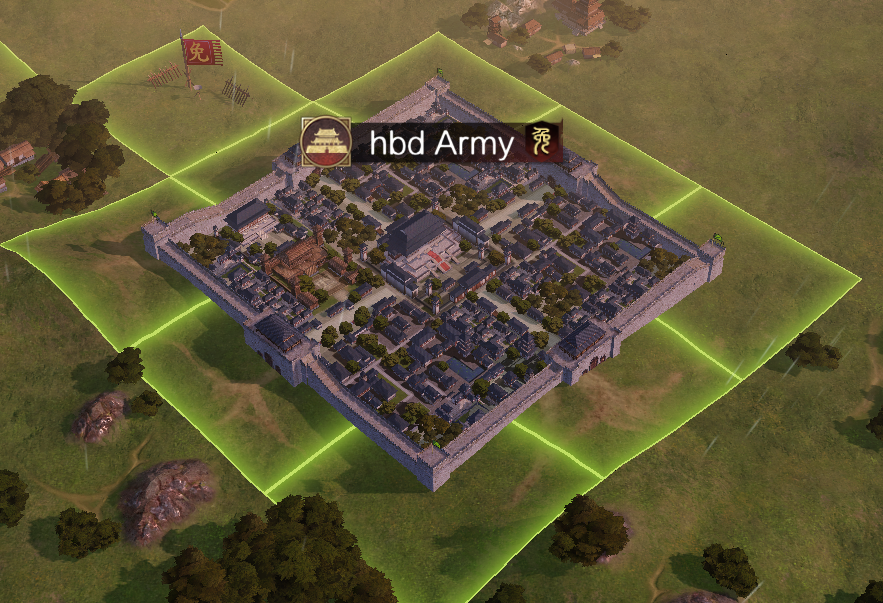
Level 5 lands present a substantial difficulty jump. Defeating a Level 5 garrison requires 5,200 to 5,600 troop strength on a dedicated 3-hero formation. You need optimized hero command costs, minimal dispatch distances via forward camps, and a cleanup squad timed to land minutes ahead of the reset clock.
| Land Level | Recommended Strength | Garrison Structure | Tactical Strategy |
|---|---|---|---|
| Level 2 Land | > 600 Strength | Basic local defenders | Single wave starter march |
| Level 3 Land | > 1,400 Strength | Light multi-unit guard | Reliable early stone and iron farming |
| Level 4 Land | > 3,000 Strength | Formidable vanguard | Draw-and-clear strategy via supply range 1 |
| Level 5 Land | 5,200 - 5,600 Strength | Full 3-hero lineup | Requires command optimization and forward camps |
Attacking Level 4 and Level 5 lands below these strength benchmarks causes catastrophic casualties or unrecoverable draw timeouts.
Morale Penalties and the 8% Strength Rule
Field combat efficiency hinges on a specific troop morale check. Whenever your army fights outside an affiliated facility, the game compares each individual hero's troop count against the defender's total army strength.
If any hero carries less than 8% of the enemy garrison's total troop strength, that hero receives a zero-morale penalty (morale = 0) for the opening fight. A hero at zero morale suffers severe reductions to damage output and damage reduction.
This penalty applies exclusively to the first engagement outside a building. Consecutive battles in that same march chain ignore the 8% threshold, allowing surviving heroes to fight with normal morale values.
To reset degraded morale after extended operations, issue a Territory Halt order on friendly land. Halting clears combat-induced morale shifts, recalculating army morale based solely on transit distance to their home facility.
Restoring stamina and recovering from failed land pushes is faster when utilizing Infinite Borders Gilt Jades to accelerate facility upgrades and commander leveling.
Garrison Reset vs Daily Deployment Refresh
Tile defenders handle recovery and redeployment through separate mechanics. Letting the 10-minute timer expire triggers a health reset, not a roster refresh.
Once the 10 minutes run out, the garrison returns to 100% troop strength, but hero compositions, general typings, and equipped skills remain completely identical. If an enemy composition hard-counters your team, waiting for the recovery timer will not reroll the defender lineup.
Garrisons refresh their lineups under only two conditions: upon tile capture (ownership change) or during the daily server reset. When scouting reveals a direct counter-composition, you must either pivot to an alternative plot or wait for the daily reset.
Players at 4,000 Fame can bypass wild tile scouting via Land Development. Spending Decrees on an owned, non-truce Level 2 plot spawns a Level 5 garrison battle directly on the tile. Defeating this spawned defense upgrades the plot to Level 5 resource yields on the spot.
Draft Reserves and Forward Fortification Logistics
Sustaining multi-wave operations requires structured recruitment and forward staging. Main cities generate reservists at a baseline rate of 300 units per hour, with each City Reserves Barracks level cutting draft recovery time by 3%. Upgraded barracks let you replenish cleanup squads quickly without depleting home defenses.
Constructing forward field fortifications eliminates the defender scaling penalty tied to long-distance marches. Standard Fortresses, Scout Camps, and Lineage Fortresses cost zero Decrees to build, with a shared cap of 10 camps across the map. These outposts provide forward staging lines that keep cleanup march times well under the 10-minute recovery threshold.
New accounts benefit from a 48-hour beginner grace period. During this window, formations consume reduced stamina and receive 100% resource refunds on canceled builds or marches, offering a low-risk environment to test two-wave timing windows.
| Infrastructure Feature | Base Capacity / Rate | Upgrade Scaling / Cost | Tactical Implication |
|---|---|---|---|
| City Reservist Recovery | 300 units / hour base | +3% draft recovery per Barracks Lv | Sustains reserve drafting between assaults |
| Field Fortifications | 10 shared camps cap | 0 Decree construction cost | Eliminates long-distance garrison scaling |
| Land Development | Lv.2 to Lv.5 plot upgrade | Requires 4,000 Fame and Decrees | Spawns Lv.5 garrison for local upgrades |
| Rookie Grace Period | 48 hours from creation | Stamina discount and full refunds | Allows aggressive early draw experimentation |
Common Execution Blunders That Cause Garrison Resets
Simple timing errors cause most failed tile captures. Avoid these frequent mistakes during multi-wave pushes:
- Launching the cleanup wave reactively: If your backup squad sits three minutes away and you wait a minute to review combat logs, the second wave lands at the 9-minute mark. Minor server delay will trigger a full garrison reset.
- Violating the 8% hero strength floor: Bringing an underleveled third hero with 200 troops against a 5,000+ strength garrison triggers the zero-morale debuff on that slot, neutralizing their combat contribution.
- Long-range direct assaults: Marching across long distances scales defender combat stats. Always deploy a zero-Decree fortress adjacent to high-tier targets.
- Ignoring draw timers on failed follow-ups: If a follow-up wave cannot arrive before the 10-minute mark, manually retreat the locked strike team to avoid a forced retreat and wasted positioning.
To keep recruitment barracks stocked and commander rosters competitive during land races, access the Infinite Borders top-up store for the resources and currency needed for rapid expansion.
FAQ
How long do I have to clear a garrison after a battle draw?
You have exactly 10 minutes from the initial engagement before the garrison regenerates. During this window, wounded garrison troops do not recover, allowing follow-up waves to finish off remaining enemy strength.
What happens if the 10-minute timer expires while my army is in a draw?
Your army will automatically retreat once the restore countdown ends. It will not engage the newly restored full-strength garrison.
Does the garrison troop lineup change when it recovers after a failed assault?
No, the garrison restores to 100% strength while keeping the exact same troop deployment. Lineups only re-roll when tile ownership changes or during the fixed daily server refresh.
Why did my hero start the battle with zero morale?
A hero entering their first battle outside friendly facilities suffers zero morale if their individual strength is under 8% of the total enemy strength. Subsequent fights in that march chain are unaffected.
How can I prevent long-distance garrison scaling when attacking high-level tiles?
Lower your marching distance by establishing nearby forward camps or keeping your supply distance to 1. Traveling across long distances increases garrison strength on traversed tiles.
Does halting on a conquered tile fix depleted army morale?
Yes, using the Territory Halt command dispels morale penalties accumulated from prior combat. Subsequent morale is calculated purely based on the distance to your affiliated facility.
Final Strategic Assessment
Garrison recovery follows predictable server rules once you plan around the 10-minute window. Pre-marching cleanup squads, building zero-Decree field fortifications to avoid distance scaling, and maintaining hero troop counts above the 8% strength floor prevent wasted drafts and failed captures. Applying these timings turns contested territory expansion into a reliable, low-casualty routine.






Comments